


What Has Mozilla Done?
 So Firefox 14 is to have Google secure search as default, preventing marketers tracking keywords used in search.
Well isn’t that the most geeky, technological April Fools you have ever heard? Ever heard of the classic whoopee cushion?
Wait a minute…it’s not a joke?? Mozilla, what have you done!?
Google introduced secure search for their signed in users with the reasoning that it will be more secure and quicker. Funny how it didn’t apply to visits from paid search, however, I’m sure there is a valid (and wholly ethical) explanation for that. Thankfully, it was never default for everyone - if you wanted security, then you can opt-in for it. However, Firefox 14 is to have secure search as default in their Google toolbar. What this means is that if you use Firefox 14 and access a website via organic search listings, you cannot be tracked in analytics. Danny Sullivan got in contact with the guys at Mozilla and did a great write up on the update and its implications which can be found here.
But why?
Yes, yes we know faster results, security blah blah. But are we convinced? Now working in natural search and dealing with Google’s secret algorithm, we inherently love a conspiracy theory or two. So let’s see if we can rustle one up about Mozilla….
At the end of 2011, it was reported that Google had agreed to pay three times more to Mozilla to be their default search engine then they did in 2010. This equates to approximately $300 million for the year. Let’s not assume the trend of increased spend will continue into 2012, however Google features in the Firefox toolbar meaning there was a renewal. We do not know what that renewal fee is as of yet but watch this space. Now the obvious question is, why invest so much into another browser when they are trying to grab market share with Chrome?
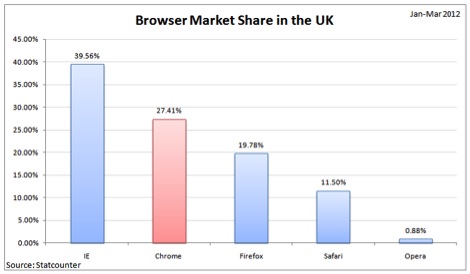
Ok, so we can see Chrome already has surpassed Firefox in share, so why not concentrate on grabbing market share from IE? Why the big investment in Firefox? Throw one more fact into the mix and we have the makings of a nice conspiracy theory. According to Mozilla’s 2010 annual report, Google accounted for about 84% of Mozilla’s $123 million in revenue. With Google tripling their investment in 2011, one could be as bold to say that Google in fact owns Mozilla.
Enter the conspiracy theory…
- Google wants default secure search across board, reducing tracking capabilities for marketers engaging in non paid search activity.
- They did not want to risk backlash and hurt their market share with Chrome.
- Firefox is in fact the guinea pig being leveraged for data as Google owns it as is using it as it’s “secondary” browser.
Far fetched?…Maybe. Ludicrous?…Perhaps.
In the meantime, it is definitely worth keeping an eye on the uptake of Firefox 14 as it will affect how we track search traffic. To reference X Files “the truth is out there”, but it sure is fun making up theories in the interim!

This is going to cause a massive leap in the dreaded “(not known)” referring keyword!
Since Google introduced it on .com in October, I have been seeing huge MoM % increases in signed in user searches. Even more so since the release on .co.uk and other countries.
Potentially they will give you back access with Google Analytics Premium in the future?
I think what gets most people is the fact that they are technically “selling” this data as PPC advertisers still receive access.
We will continually find it hard to create useful pages to the end user if we do not know how they arrived there and potentially why they bounced.
Great blog post! Who doesn’t love a conspiracy theory?!
It’s no surprise to see how the changes that Google makes across its portfolio pushes more value to its paid search listings. It’s the same with adwords enhancements, new beta products such as communication ads and product listing ads are great from a user perspective but dominate more of the SERP with paid for listings.